


Laboratory Processes
- Distillation column - Armfield UOP3CC
- Membrane separation plant
- Multifunction station - Armfield PCT40
- Three tank system - DTS200
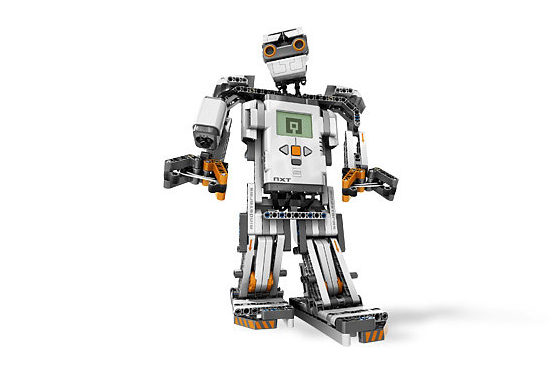
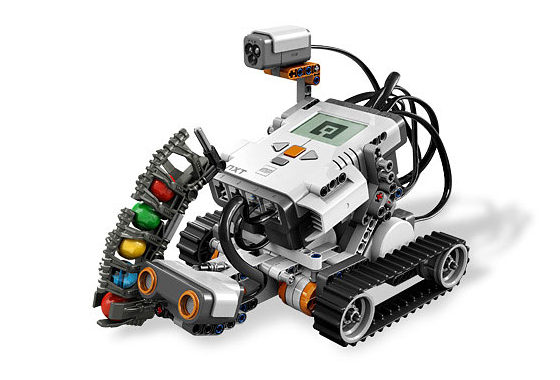
- Lego Mindstorms
- Rotary inverted pendulum Furuta
Distillation column - Armfield UOP3CC
Laboratory station Armfield UOP3CC represents the distillation column. It enables the future engineers to test the initial stage in the process engineering, as well as the design and implementation of advanced control strategies using models. The plant allows both continuous and batch operations.
The different possibilities for control loops are:
Controller can be implemented using:
Hardware:
|

|
Membrane separation plant

A membrane is a selective barrier; it allows some things to pass through but stops others. These processes have found a wide range of applications. In food industry it is used for fruit juice and milk clarification and temperature plays an important role in this. In pharmaceutical industry the membrane separation processes are used for different aims like albumin production from human blood and anti body preparation. Biotechnological industries use membrane processes for separation and elimination of impurities like peptides and salts. In automotive industry they are used in paint and adhesive clarification e.g. Fiat, Ferrari use microfiltration to produce high quality body paints.
The membrane plant shown is used for various types of filtration, such as nanofiltration, ultrafiltration and reverse osmosis. System management is done using industrial control systems, PLC, SCADA, and PC operator station that is used for controlling and collecting data from various sensors (pressure, temperature and conductivity) using Matlab / Simulink. Control allows testing and application of new control algorithms.
Multifunction station - Armfield PCT40
Multifunctional Armfield PCT40 station is a system with multiple devices. It consists of a base module and additional modules, i.e. PCT40, PCT41, and PCT42. PCT40 basic module (FIG. PCT40_1) comprises two chemical processes, i.e. liquid tanks and the heat exchanger. In the basic module are also arranged pipes, pumps, valves, sensors and other electrical components which are used for measurement and control of process variables. The station is connected to the water supply through a pressure regulator with an integrated filter.

PCT41 plugin is a chemical reactor, which is located on the left side of the basic module. PCT42 an additional module; is a sensor for measuring pH. All three of chemical devices can be joined together. Various types of controllers can be implemented to the individual devices.
Heat exchanger

The heat exchanger (Fig. PCT40_2) consists of a cylindrical vessel, which is located in the right part of the basic module PCT40. It contains two coils, one for cooling, and the other for heating. The temperature of the liquid in the cooling coil is sensed at the input and the output. Another temperature sensor senses the temperature of the liquid inside the heat exchanger. The level of liquids is measured in the exchanger. Level sensor ensures that the heating coil will not turn on until it is completely submerged. There is a thermostat which is used for controlling temperature, i.e. if the temperature of the liquid exchanger exceeds the target value, the heater turns off. The liquid in the heat exchanger and the cooling coil may be supplied through the PSV, or by means of a peristaltic pump. For pumping hot liquids; a gear pump is used.
Chemical reactor

Chemical reactor (Fig. PCT40_3) consists of a cylindrical vessel, which is located on the left side of the basic module PCT40. Heating or cooling of the reactor coil is manageable. The homogeneity of the reaction mixture is ensured by an agitator in the middle of the container. Feeding to the reactor is done using peristaltic pumps or via the PSV. To have a constant water level in the reactor, the reaction mixture is provided with an overflow pipe. The temperature of the inlet can be monitored by a temperature sensor. The concentration of the product is measured by the conductivity sensor. It also posseses a manual drain valve.
Three tank system - DTS200
The process shown in Fig. DTS200_1 consists of three identical cylindrical liquid tanks, associated piping, and valves. The water is driven by two pumps and it circulates in a closed loop. More information can be found at manufacturer's website.

Lego Mindstorms

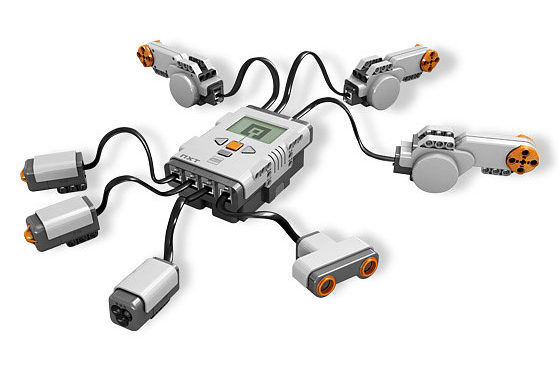
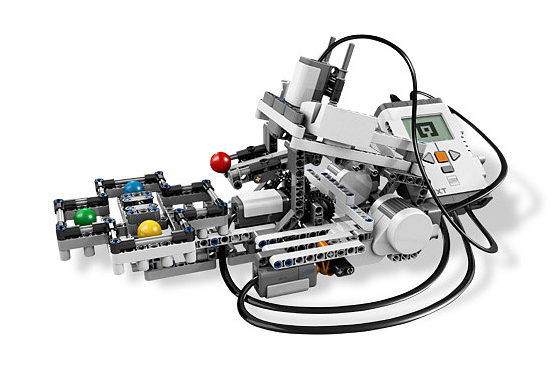
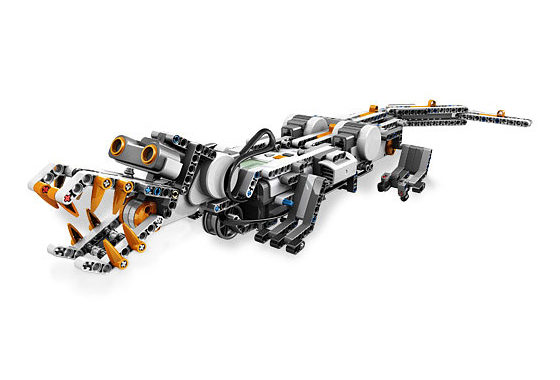
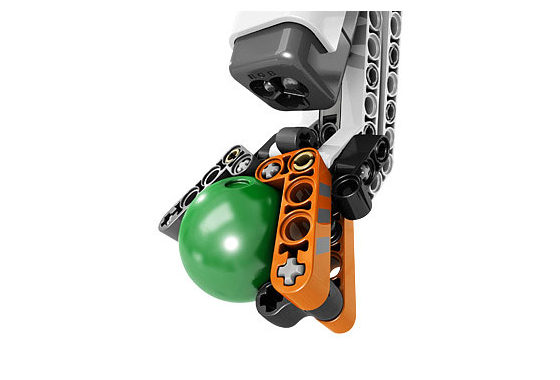
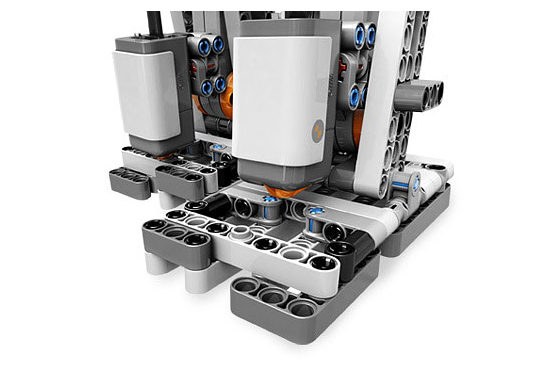
LEGO Mindstorms is a set of programmable robotic kits manufactured by Lego. Mindstorms NXT kit version consists three motors and a sensor for touch, light, sound and distance. It can also have a set up model of a computer-controlled electromechanical parts.
Rotary inverted pendulum Furuta

Rotary inverted pendulum FPM-211 is composed of the following: an arm rotating in the horizontal plane where one of its ends is mounted on a motor shaft and where a rod is mounted on its other end. The rod's lower end is mounted on the arm's free end in such a manner that, the rod is moving as an inverted pendulum in a plane that is at all times perpendicular to the rotating arm. Mathematical model of this system is characteristic by its nonlinearity and fast dynamics. Objectives for control algorithms are either stabilization at upright/downright position or Swing up. They can be applied directly in REX environment as block scheme or script written in C.

Institute of Information Engineering, Automation and Mathematics was established in 1.1.2006 from two departments: Department of Information Engineering and Process Control and Department of Mathematics.
Latest Posts
- New research paper15.10.2026 9:34
- Defense of the dissertation theses18.8.2026 17:29
- IAM PhD Student at EECI Summer School 20266.7.2026 12:41
Contact
Radlinského 9
812 37 Bratislava, Slovakia
Tel.: +421 259 325 366
Fax: +421 259 325 340
Mobil: +421 918 674 366
e-mail: office@uiam.sk
6th floor, Block C NB
2026 © All Rights Reserved. UIAM FCHPT STU | webmaster@uiam.sk